'Goldilocks is leaving the building': JPMorgan sees a negative growth shock coming for the economy
TIMOTHY A. CLARY / AFP via Getty Images
- JPMorgan says the Iran war has soured the economic outlook.
- The bank says it's anticipating a negative economic growth shock due to sticky inflation.
- Higher energy prices could hurt consumer spending and weigh on the job market, its economists said.
Say goodbye to the economy's best-case scenario this year.
Economists at JPMorgan said they've officially taken a "Goldilocks scenario" — an ideal situation for markets where inflation cools and the economy continues to expand — off the table. The bank says to blame the Iran war, with the latest surge in inflation likely to spark a negative growth shock.
In a note to clients on Friday, economists said they believe higher energy prices could push core inflation past 3%, which was the bank's "long-standing forecast" for global core inflation at the start of the year.
Rising transportation and input costs stemming from higher oil prices could also help push core goods inflation past 2%, above the Fed's long-running price target, they estimated.
The bank trimmed its global economic growth forecast by around a quarter of a percentage point. It pointed to the possible knock-on effects of higher prices, such as higher interest rates, subdued consumer spending, and consequent weakness in the job market.
"Risks are elevated that an energy price shock squeezes household purchasing power and depresses business sentiment, raising the specter of a negative growth shock raising unemployment rates," a team led by Bruce Kasman, JPMorgan's chief economist, wrote.
Inflation could fall eventually, but only after the growth shock is felt, the bank said, with weaker demand slowing the pace of price increases.
"We emphasize that the Goldilocks scenario that had been incorporated in 2026-27 central bank forecasts looks increasingly unlikely, with any meaningful inflation decline likely to be precipitated by a material growth disappointment," the economists said.
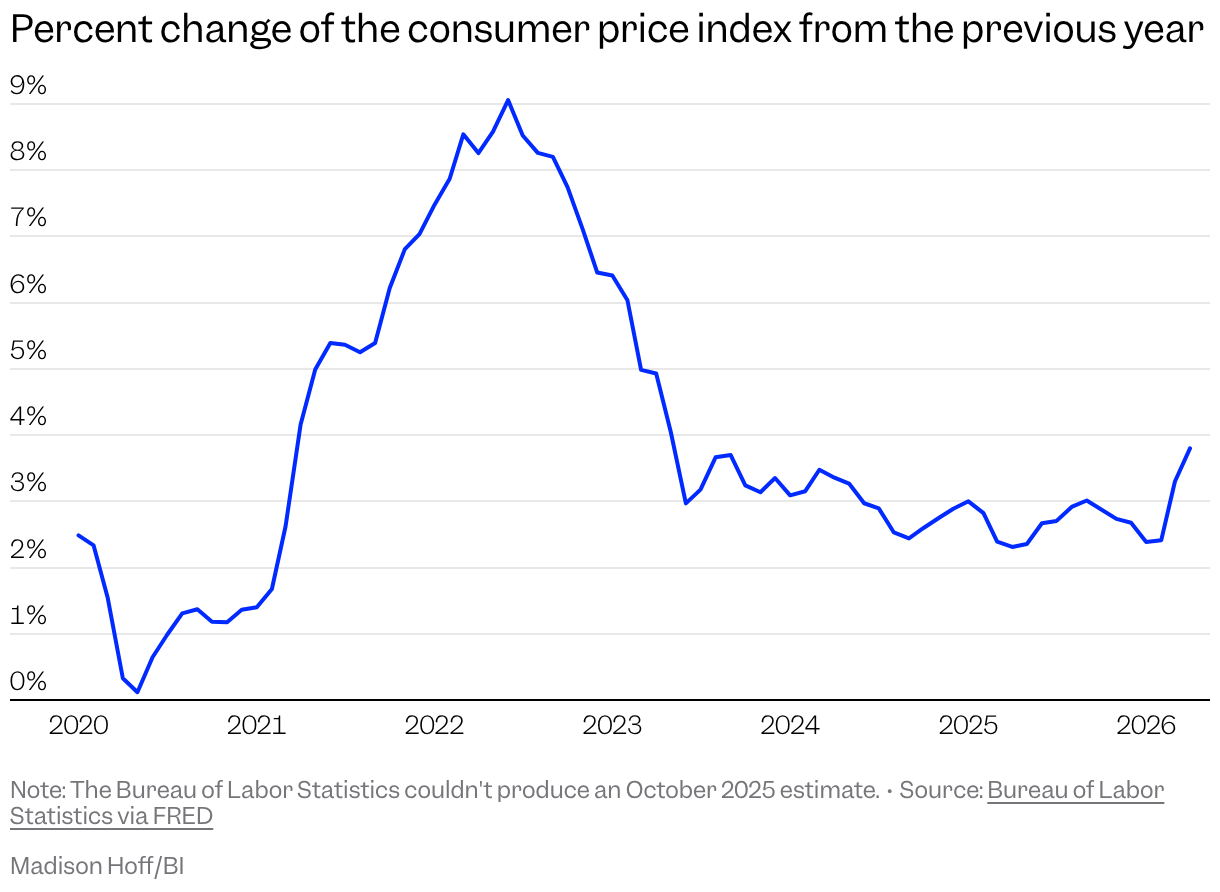
Inflation has been the central worry for markets while oil has surged during the Iran war. Consumer prices accelerated to a 3.8% yearly pace in April, marking the highest pace of inflation in three years.
Gas prices touched $4.56 a gallon on Thursday, the most Americans have paid at the pump in four years.
JPMorgan pointed to several other factors that risk stoking inflation in the near future, which could then help contribute to a growth shock:
- Supply chain pressures. Supply chains look less resilient than they have in previous years, the bank said, pointing to recent supply shocks and growing tensions around world trade. Supply chain snags are known to be inflationary, as they can push up input costs for businesses.
Wage inflation. Wages spiked following the pandemic and have only "partly unwound," the bank said. Higher wages can lead to higher prices, a phenomenon known as the wage-price spiral.
"With global unemployment rates still below pre-pandemic levels, a solid growth environment should not be expected to return wage inflation to levels consistent with 2% inflation," JPMorgan said.
- Short-term inflation expectations, which influence inflation itself, are rising. The expected 1-year inflation rate 1 year from now rose to 3.53% in May, up 124 basis points since March, according to the Cleveland Fed.
"While this inflation spike will likely quickly fade, the second-round effects on growth and core inflation could be large," the bank wrote.
Other forecasters have warned that inflationary pressures could linger long after the US strikes a peace deal with Iran. That's partly because it could take months for oil flows to normalize after the Strait of Hormuz is reopened.
Morgan Stanley recently speculated that inflation could peak sometime in May or June. The bank pointed to other ongoing price pressures, like tariffs and a lag in housing inflation measures.
from Business Insider https://ift.tt/S7eKuX2
via IFTTT
Comments
Post a Comment